
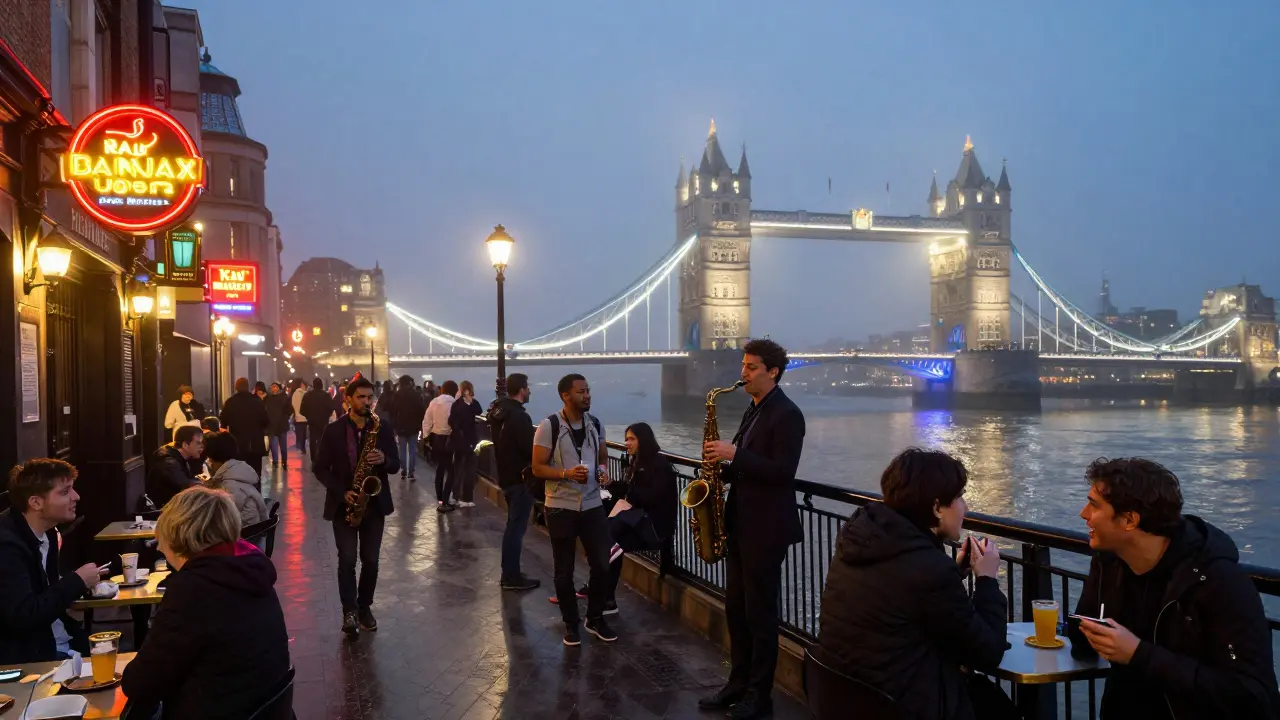
You’ve seen the photos: neon signs glowing over Thames-side pubs, jazz drifting out of basement clubs in Soho, street performers lighting up Camden at 2 a.m. But why does London night feel different? Why do people fly in just to experience it? It’s not just about bars or clubs. It’s about something deeper-something that happens when the sun goes down and the city decides to rewrite its rules.
What Makes London Night Truly Unique?
Most cities have nightlife. But London? It’s got layers. You can be in a 300-year-old gin palace in Mayfair one hour, then dancing in a warehouse rave under a railway bridge in Peckham the next. There’s no single "London night." There are dozens of them-and they all coexist without fighting for space.
Think about it: Paris has romance. Tokyo has neon chaos. New York has energy. But London? It gives you permission to be whoever you want after dark. No judgment. No dress code police. You can wear a suit and sip champagne at a rooftop bar in the City, then ditch it for ripped jeans and a hoodie to catch a live band in Shoreditch. No one cares. That’s rare.
And it’s not just about freedom. It’s about history. London’s nightlife didn’t start with DJs and cocktails. It started with gin dens in the 1700s, music halls in the 1800s, jazz clubs in the 1920s, punk squats in the 1970s, and rave bunkers in the 1990s. Each generation didn’t erase the last-they built on top of it. So today, you can walk past a Georgian pub that’s been serving ale since 1789 and still hear the echo of a 1988 acid house track leaking from the basement.
Why Tourists Keep Coming Back
Every year, over 20 million visitors come to London. And more than half of them say they plan their trip around what happens after dark. Why? Because London doesn’t shut off. It transforms.
At 10 p.m., you’re sipping whiskey in a hidden speakeasy behind a bookshelf in Covent Garden. At midnight, you’re watching a mime troupe perform on the South Bank. At 2 a.m., you’re eating a bacon butty from a van in Brixton while a local DJ drops a remix of a 1970s reggae classic. At 4 a.m., you’re watching the sunrise over Tower Bridge with strangers who became friends because you all waited 45 minutes for the last Tube.
It’s not curated. It’s alive. And that’s what makes it unforgettable. You can’t book a "London night" experience on Airbnb. You have to stumble into it. And that’s the point.
The Real Secret: It’s Not About the Places-it’s About the People
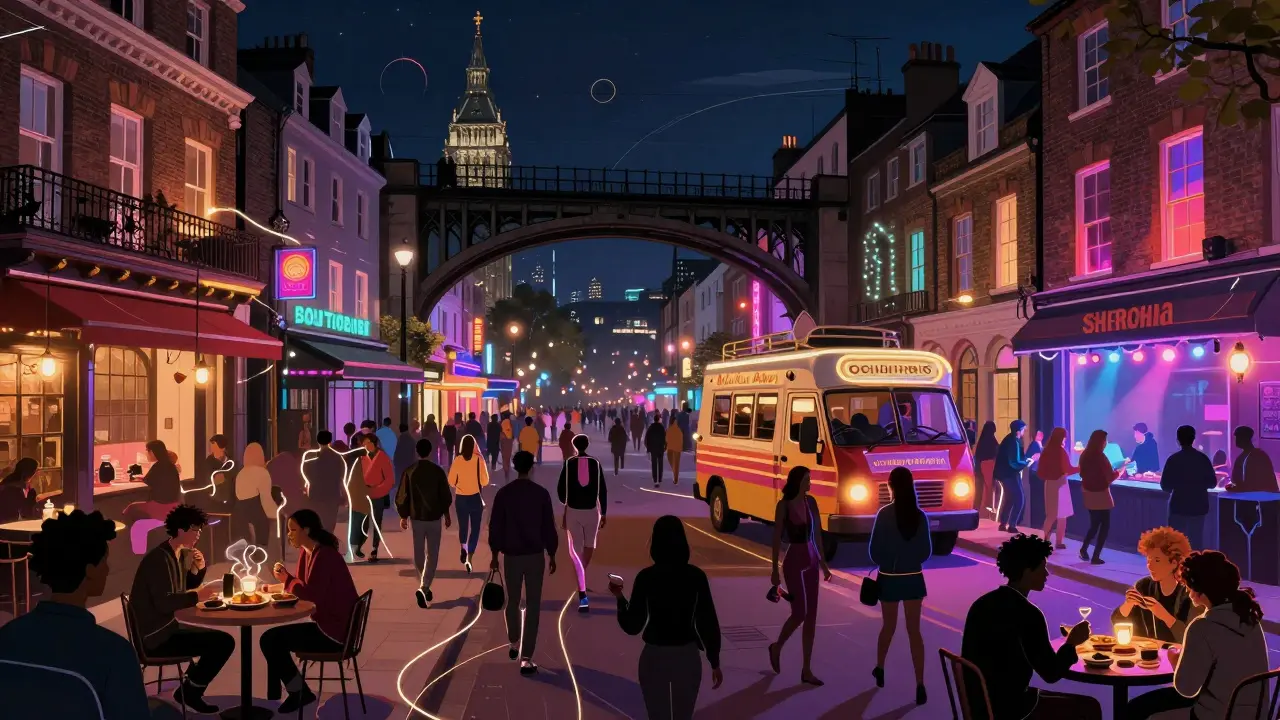
London’s night scene thrives because of its diversity. You’ll find students from Lagos, DJs from Kingston, chefs from Hanoi, and poets from Belfast all working the same shift at the same bar. The city doesn’t just tolerate difference-it needs it. That’s why you get a Thai curry with a side of dubstep. A French bistro with a live Korean hip-hop set. A Polish vodka bar where the bartender tells ghost stories in broken English.
There’s no "London identity" after dark. There are hundreds. And they all talk to each other. That’s why you can’t replicate it. Try to copy London’s nightlife in Berlin or Sydney? You’ll get a great scene-but it won’t have the same texture. It won’t feel like it’s been stitched together from 200 different cultures over 200 years.
Where to Find the Real London Night
Forget the guidebooks. The best spots aren’t listed on TripAdvisor. Here’s where to go if you want the real thing:
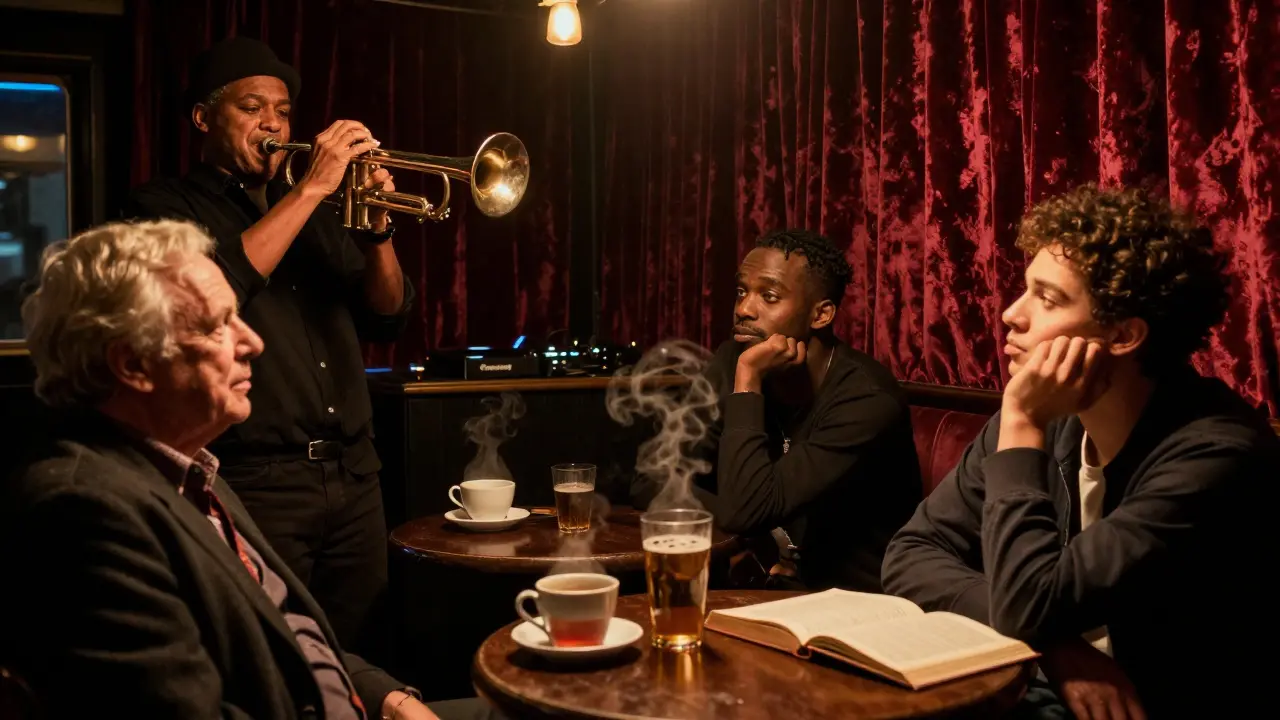
- Soho - Still the heartbeat. Live music, drag shows, underground jazz, and bars that never close. Try The French House-it’s been a writer’s haunt since the 1920s.
- Camden - Not just for tourists. The back alleys here turn into impromptu gigs. Look for the sign that says "No Cover, No Rules."
- Peckham - The new frontier. Warehouse parties, Afrobeat nights, and food stalls that serve jerk chicken and plantain fries until dawn.
- Shoreditch - Still gritty. If you see a door with a single red light, go in. You might find a silent disco, a poetry slam, or a secret cocktail lab.
- South Bank - The 24-hour zone. Street performers, open-air cinema, and late-night fish and chips under the lights of the London Eye.
Don’t chase the "hottest" club. Chase the crowd that looks like they’ve been there since 2 a.m. and still aren’t tired.
What to Expect When You Step Into London Night
Here’s what actually happens when you walk into a London pub at midnight:
- You order a pint. The barman doesn’t ask for ID. He just smiles and pours.
- A stranger at the next table asks if you’ve tried the curry downstairs. You say no. They invite you.
- You end up eating with three people you’ve never met. One’s a nurse. One’s a retired bus driver. One’s a DJ from Nigeria.
- Someone starts singing a folk song. Someone else joins in. A third person pulls out a ukulele.
- At 3 a.m., you realize you’ve been there for five hours. And you don’t want to leave.
That’s not a scene. That’s a ritual. And it happens every single night.
How London Night Compares to Other Global Cities
| Aspect | London | Berlin | Tokyo |
|---|---|---|---|
| Open Hours | Most bars open until 2-4 a.m.; some 24/7 | Many clubs open until 6 a.m. or later | Bars close by 1-2 a.m.; clubs until 4 a.m. |
| Music Diversity | From jazz to grime to reggae-all in one night | Techno dominates; underground scene is intense | Pop, idol music, and karaoke rule |
| Cultural Mix | Over 300 languages spoken; global food and music | Strong European influence; less global diversity | Primarily Japanese; very little foreign influence |
| Accessibility | 24-hour Tube on weekends; easy to get around | Public transport stops early; rely on taxis | Trains stop by 1 a.m.; taxis expensive |
| Atmosphere | Chaotic, welcoming, unpredictable | Industrial, minimal, intense | Polite, structured, quiet |
London wins because it doesn’t try to be anything. It just is. And that’s why it’s famous.
Frequently Asked Questions
Is London safe at night?
Generally, yes. Central areas like Soho, Covent Garden, and South Bank are well-lit and patrolled. Stick to busy streets, avoid isolated alleyways after 2 a.m., and use the Night Tube on weekends. Most crime is petty-pickpocketing in crowded clubs, not violence. Londoners are used to late-night crowds and look out for each other.
Do I need to dress up for London night?
Nope. Unless you’re heading to a private members’ club or a fancy rooftop bar, jeans and a jacket are fine. Some places in Mayfair might ask for smart casual, but even then, no tie required. The rule? If you look like you belong, you belong. No one checks your shoes.
What’s the cheapest way to experience London night?
Start in Peckham or Brixton. Grab a £5 burger from a food truck, hop on a bus to a pub with live acoustic music, and stay until the last train. Many pubs offer free entry until midnight. Skip the clubs. The real magic happens in small venues where the band doesn’t charge cover and the crowd sings along.
Can I find vegan or halal food at 3 a.m. in London?
Absolutely. London has 24-hour halal kebab shops in East London, vegan burger vans in Camden, and Indian restaurants in Wembley that serve biryani until dawn. You’ll never go hungry. The city runs on food as much as it does on music.
Why do locals love London night more than tourists?
Because they know where the secrets are. Tourists go to the big clubs. Locals know about the basement jazz bar in Hackney, the karaoke room in Willesden, or the 24-hour bookshop in Islington where you can read poetry over tea. For Londoners, night isn’t entertainment-it’s home.
Final Thought: It’s Not a Scene. It’s a State of Mind.
London night isn’t famous because it’s loud. It’s famous because it’s open. Open to strangers. Open to mistakes. Open to the weird, the quiet, the loud, the lost, and the found. You don’t go to London to party. You go to London to feel like you belong-even if just for one night.
And that’s why, after all these years, people still come. Not for the lights. Not for the music. But because, for once, they don’t have to be anyone else.


5 Comments
London night works because it’s not designed. It evolved. No city planner sat in a room and said, "Let’s make a place where a Nigerian DJ, a Polish bartender, and a retired bus driver all end up singing folk songs at 3 a.m." It just happened. That’s organic culture. You can’t replicate it with marketing budgets or influencer campaigns.
/p>Also, the 24-hour Tube on weekends? Absolute game-changer. No other global city makes that kind of logistical sense for nightlife. Tokyo’s trains stop at 1 a.m. Berlin’s U-Bahn is a nightmare after midnight. London just… keeps going. Simple as that.
Oh, please. You’re romanticizing chaos. London isn’t magical-it’s just poorly regulated. The reason you can walk into a pub at 2 a.m. and not get ID’d is because enforcement is a joke. The "no dress code" isn’t freedom-it’s indifference. And don’t get me started on the "diversity" narrative. Most of these "authentic" experiences are just gentrified spaces with fake neon and overpriced craft lagers. The real London night? The one where the council shuts down half the venues because of noise complaints. That’s the truth.
/p>Also, the 1789 gin palace? It’s now a branch of a chain owned by a multinational conglomerate. You’re not experiencing history-you’re paying for a branded nostalgia package.
It’s ironic how people call London "open" while ignoring the fact that the most authentic spaces are disappearing. The basement jazz bar in Hackney? Closed last year for "structural repairs." The 24-hour bookshop in Islington? Now a vegan coffee chain with a $9 latte. The real locals? They’re either priced out or too exhausted to care.
/p>I’ve been to 17 cities with nightlife. London doesn’t stand out-it just has more tourists willing to believe the myth. The music isn’t diverse-it’s fragmented. The people aren’t welcoming-they’re too busy scrolling on their phones between sips of £12 cocktails.
And the "no judgment" thing? Try showing up in a tracksuit to Soho. See how long you last before someone side-eyes you into oblivion.
⚠️ WARNING: This whole "London night is magical" narrative is a government-funded propaganda campaign. 🕵️♀️
/p>Did you know? The 24-hour Tube was introduced in 2016 to distract from the real reason people stay out late: the NHS night shift workers are being forced to commute after 12-hour shifts because of understaffing. The "random ukulele singalong"? That’s a coded signal for human trafficking rings using music venues as fronts. 🚨
And the "Thai curry with dubstep"? That’s not fusion-it’s a psyop to normalize cultural dilution. The real London night? It’s a front for a secret AI-driven social experiment run from a bunker under the Thames. I’ve seen the blueprints. 🤖🔮
Also, the red light door in Shoreditch? That’s not a silent disco. It’s a portal. I went in once. Came out speaking fluent 17th-century Cockney. I’m still not sure if I’m human anymore. 😱
How quaint. You speak of London’s nightlife as if it’s some organic tapestry of culture. But let’s be honest: it’s the last bastion of postcolonial performative authenticity. The "jazz in Soho"? That’s just a curated relic of British imperial nostalgia. The "Afrobeat in Peckham"? A commodified echo of African diasporic expression, repackaged for Instagrammable aesthetics.
/p>And the "no dress code"? That’s not liberation-it’s the collapse of bourgeois discipline. You think you’re free? You’re just culturally adrift, mistaking decay for diversity.
The real tragedy? The only thing more authentic than London’s night is its silence at dawn-when the last drunk poet stumbles home, and the city remembers it was never meant to be this loud. 🍸🌙
Also, I once had a Negroni at The French House while listening to a live recording of Virginia Woolf reading "Orlando." That’s the level of cultural alchemy you’re not even aware you’re missing.