

You’ve seen them-women in Paris sipping espresso with a half-smile, a London girl adjusting her scarf just so, a Berliner locking eyes across a café and looking away too fast. You wonder if it’s attraction… or just habit. What if those tiny movements-how she holds her cup, where she looks when you speak-are the real language of interest? This isn’t about picking up women. It’s about understanding what eurogirls actually mean when they don’t say a word.
What You’re Really Seeing
Most guys think flirting means direct eye contact, leaning in, or touching your arm. That’s American TV flirting. In Europe, it’s quieter. Much quieter. A Eurogirl might not smile at you until the third time you speak. She might not make eye contact at all-but she’ll glance up every 12 seconds, just long enough to check if you’re still there. That’s not nervousness. That’s testing.
Think of it like this: European women grow up in cultures where overt advances are seen as pushy, even rude. So they communicate interest through micro-behaviors. These aren’t random. They’re learned. They’re consistent. And if you know what to look for, you’ll stop guessing and start reading.
The 5 Key Cues (And What They Mean)
- The Hair Tuck - She brushes a strand behind her ear… then does it again five minutes later. Not because her hair is in her face. Because she’s subtly drawing attention to her neck and face. In Vienna, Prague, and Amsterdam, this is one of the most common signals of interest.
- The Mirror Move - You cross your legs. She crosses hers the same way. You lean back. She leans back. Not exactly. But close enough. This isn’t coincidence. It’s subconscious mirroring-a sign of rapport. Studies show people who mirror each other are perceived as more likable. Eurogirls do this instinctively.
- The Pause-and-Look - You say something funny. She laughs… then stops. Looks at you. Holds your gaze for 1.5 seconds. Looks down. Smiles. That’s not shyness. That’s a pause to let the moment settle. She’s giving you space to respond. If you say nothing, she’ll likely look up again. If you smile back? You’re in.
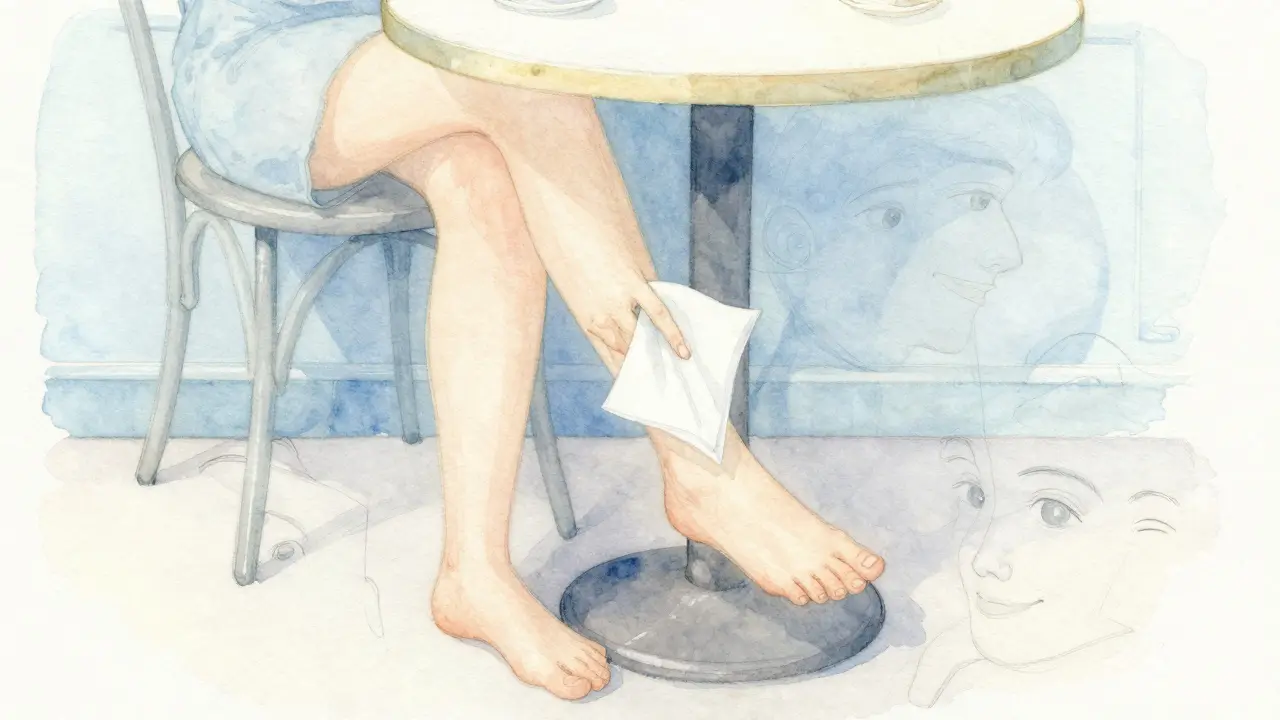
- The Object Play - She’s holding a pen, a napkin, a wine glass. She rotates it slowly. Twirls it. Stares at it while you talk. This looks like distraction. It’s not. It’s a way to manage anxiety while staying engaged. When she puts it down and leans forward? That’s the green light.
- The Foot Angle - She’s sitting with both feet flat. Then, slowly, one foot turns toward you. Not a full point. Just a 15-degree shift. Feet point where the body wants to go. If her foot’s facing you? She’s mentally stepping closer.
Why This Works Better Than Talking
Here’s the truth: most guys overtalk. They think if they’re funny, charming, or confident, they’ll win. But in Europe, especially in cities like Copenhagen, Stockholm, or Milan, women value quiet confidence. The louder you are, the less you’re noticed. The quieter you are, the more you’re watched.
Women who use subtle cues aren’t playing hard to get. They’re filtering. They’re looking for someone who notices the small things. Someone who doesn’t need to be told they’re interested. Someone who reads silence like a language.
When you respond to these cues-not with a line, but with a calm smile, a slight nod, or simply holding eye contact a beat longer-you signal you’re not just listening. You’re understanding. And that’s rare.

Where to Spot These Cues (And Where to Avoid Them)
These signals don’t show up everywhere. They’re strongest in places where people are relaxed but not drunk. Avoid clubs. Avoid crowded bars. Look instead at:
- Independent coffee shops in Berlin’s Kreuzberg or Barcelona’s Gràcia
- Art gallery openings in London’s Shoreditch
- Bookstore cafés in Amsterdam’s Jordaan
- Evening walks along the Seine in Paris
These are spaces where conversation flows slowly. Where people aren’t performing. Where body language speaks louder than volume.
And avoid tourist traps. If you’re in a line for the Eiffel Tower or standing outside Big Ben, people aren’t looking for connection. They’re looking for their next photo op. The cues aren’t there because the context isn’t right.
What Happens When You Get It Right
Let’s say you’re at a quiet café in Prague. You notice she’s been glancing up every 10 minutes. You notice her foot turned toward you. You notice she’s been twisting her napkin. You don’t say anything. You just sip your coffee. Smile when she looks up. Let the silence sit.
Five minutes later, she asks, “Do you come here often?”
That’s not a pickup line. That’s a reward.
She didn’t need to say she liked you. You already knew. And now, she’s giving you permission to speak.
Common Mistakes (And How to Fix Them)
Most guys mess this up in three ways:
- They over-interpret. She looked at you? That’s not a signal-it’s a blink. Don’t assume every glance means attraction. Look for patterns. Three or more cues over 15+ minutes? That’s a signal.
- They rush. If you respond too fast, you scare her off. Wait. Let her lead. If she’s interested, she’ll keep showing up. If not? She’ll stop.
- They speak too soon. Don’t open with a compliment. Don’t say, “You’re beautiful.” Say something about the book she’s reading. The music playing. The weather. Then watch. If she leans in? You’re golden.
Why This Matters Beyond Dating
Mastering subtle body language isn’t just about attracting women. It’s about becoming someone people feel comfortable around. Whether you’re networking in Zurich, negotiating in Brussels, or just making friends in Lisbon-reading silence gives you an edge.
People don’t remember what you said. They remember how you made them feel. And if you can read the quiet signals, you make people feel seen. That’s the real power.
Final Thought: It’s Not About Tricks
This isn’t a game. It’s not a system. It’s not about “getting” someone. It’s about learning to pay attention-to the spaces between words, to the pauses, to the way someone holds their breath when they’re nervous or excited.
When you stop trying to impress and start trying to understand, you stop being just another guy. You become someone who notices. And that’s the most attractive thing of all.
Are these body language cues the same across all European countries?
No. While many cues like mirroring and foot direction are universal, some vary by culture. For example, in Russia and Eastern Europe, prolonged eye contact can feel aggressive, so women often use glances instead. In Italy and Spain, touch is more common-even a light arm brush can signal comfort. In Nordic countries, silence and minimal movement are signs of deep interest. The key is observing context, not applying one rule everywhere.
Can men use these cues too?
Absolutely. But men’s cues are often more about stillness than movement. A man who listens without interrupting, who doesn’t lean in too close, who lets pauses happen without filling them-those are the signals women notice. Men who try to mimic female cues (like hair-tucking) often come off as awkward. Instead, focus on calm presence. That’s the most powerful signal a man can send.
What if I misread a cue and embarrass myself?
It happens. If you misread a glance as interest and say something forward, most women will just smile politely and change the subject. They won’t think less of you-they’ll think you’re a little eager. The real mistake isn’t misreading a cue. It’s reacting with frustration or guilt. Stay calm. Keep it light. Say, “Sorry, I thought I saw something.” Then move on. Confidence isn’t about being right. It’s about being unshaken.
Is this just about attraction, or can it help in professional settings?
It’s even more valuable in professional settings. In meetings across Europe, people who notice subtle cues-like someone leaning forward slightly, or adjusting their glasses before speaking-often get invited into key conversations. These are the people others trust to read the room. You don’t need to be loud to lead. You just need to be aware.
How long does it take to get good at reading these cues?
You’ll start noticing them within a week if you practice in low-pressure settings-like cafés or museums. But true mastery takes months. It’s not about memorizing a checklist. It’s about developing a habit of observation. The more you watch without judging, the more natural it becomes. Think of it like learning a new language. At first, you translate every word. Later, you just understand.






5 Comments
This is so spot-on. I used to think I was just bad at reading people-turns out I was just shouting over the quiet signals.
/p>Now I just sit, sip my coffee, and watch. No lines. No charm offensive. Just presence.
And guess what? It works. Last week in Berlin, I didn’t say a word for 20 minutes-and she asked if I wanted to join her for dinner.
Not because I tried to impress her. Because I didn’t try at all.
Stop performing. Start observing.
That’s the real hack.
Also, the foot angle thing? Game-changer. I swear, I’ve started checking feet before I even look at faces now.
It’s wild how much your body tells you when your mouth is shut.
Okay but what if this is all just a cult? What if someone’s training women to do these things to manipulate men into thinking they’re ‘deep’? I’ve seen documentaries-corporate spies use mirroring to gain trust. What if this is the same thing? What if these women are being coached by dating coaches to make men feel special so they’ll buy more books? I’m not saying it’s fake-I’m saying it’s weaponized. And you’re all just falling for the script.
/p>YES. YES. YES.
/p>This is the energy I needed today.
Stop chasing. Start noticing.
It’s not about tricks-it’s about being present.
And honestly? The most attractive thing you can do is not say anything at all.
Let the silence breathe.
Let her lean in.
Let her foot turn.
You don’t need to say ‘hey beautiful’-you just need to be still enough to see her.
Go to a café. Sit. Watch. Breathe.
That’s your new dating app.
And it’s free.
And it actually works.
OMG I’ve been doing the hair tuck thing without even knowing it!! I thought I was just being fidgety, but now I realize I do it when I’m into someone and trying not to look too obvious.
/p>Also, the pause-and-look? I’ve had guys totally miss it and then ask me if I’m even interested. Ugh.
But then there was this one guy in Amsterdam who just nodded after I looked up-he didn’t say anything, just smiled-and I swear I felt my heart do a backflip.
He didn’t try to impress me. He just… saw me.
And that’s the whole thing, right?
Also, I think men’s cues are way more about stillness-like when they just sit quietly and actually listen instead of talking over you. That’s the real vibe.
Sorry for the typos, typing fast because I’m so excited!!
Love this. I’m a guy who used to think confidence meant loudness. Turned out it meant silence.
/p>Also, the part about professional settings? So true. In Brussels, I noticed a colleague kept adjusting her glasses before speaking-so I’d wait. Let her finish. Didn’t interrupt. Didn’t rush. Next thing I knew, she was inviting me to lead the next project.
People don’t remember your words. They remember how you made them feel heard.
And yeah, misreading a cue? Happened to me once. Said something too forward. She just laughed and said, ‘You’re sweet.’ No drama. No awkwardness. I said, ‘Fair enough,’ and changed the topic to the art on the wall.
That’s all it takes.
Stay calm. Stay curious.
Not every glance means yes.
But when you learn to read the ones that do? You stop feeling lost.
You start feeling alive.