
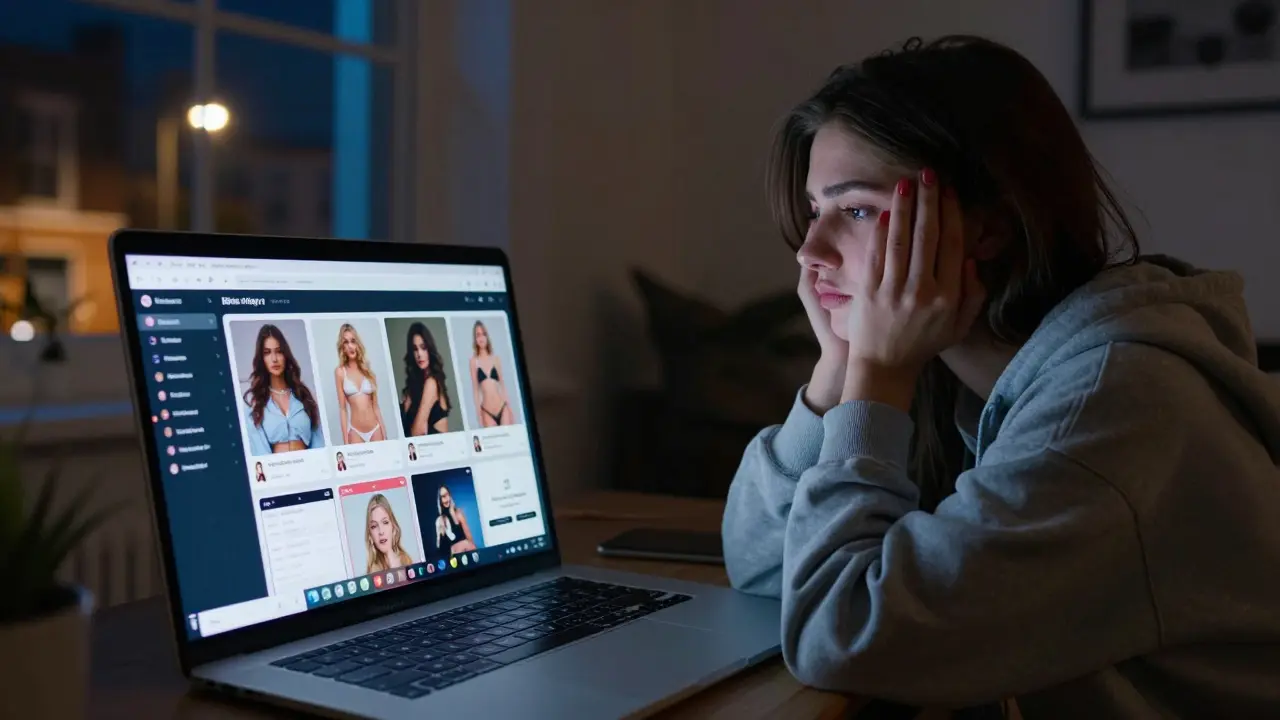
You’ve seen it. Scroll through Tinder. Swipe right on a profile with a certain look-curves front and center, confidence unapologetic. You’ve asked yourself: busty babes are the new default? Is this really what people want now?
It’s not just you. In London, dating has shifted. Not because everyone suddenly agrees on one ideal, but because visibility, social media, and algorithm-driven apps have turned a physical trait into a cultural signal. And it’s changing how people approach connection-sometimes for the better, often for the worse.
What’s Really Going On With This ‘Standard’?
Let’s cut through the noise. There’s no official rulebook that says ‘busty babes only.’ But here’s what’s happening: apps like Tinder and Bumble prioritize profiles with high engagement. Photos that show curves, tight clothing, or body-hugging outfits get more swipes. That’s not because people secretly agreed-it’s because algorithms learned that those images trigger more clicks, more matches, more time spent on the app.
So what started as a trend-women confidently showing off their bodies-became a self-reinforcing loop. More women post those photos because they get results. More men swipe right because that’s what the feed shows them. Over time, it feels like a standard. But it’s not a rule. It’s a pattern.
And it’s leaving people out. Thin women feel invisible. Women with smaller busts get ghosted. Men who prefer subtlety or personality over silhouette start wondering if they’re ‘out of touch.’ Meanwhile, women who lean into this aesthetic report feeling objectified-even when they’re the ones posting the photos.
Why This Isn’t Really About Attraction
Here’s the truth: attraction isn’t one-size-fits-all. Studies from the University of London’s Psychology Department show that while physical traits like body shape influence initial interest, long-term connection is driven by emotional safety, humor, and shared values. But apps don’t show you those things on the first screen.
What you’re seeing isn’t a shift in desire-it’s a shift in presentation. Social media rewards boldness. TikTok and Instagram thrive on visual shorthand. So women, especially in cities like London where dating is fast-paced and competitive, adapt. They learn that a photo with a certain silhouette gets more replies. That’s not dating. That’s performance.
And men? They’re not choosing busty babes because they suddenly decided it’s the only thing that matters. They’re choosing what’s easiest to process in a 0.8-second swipe. The brain takes shortcuts. Algorithms exploit that. The result? A distorted mirror of what people actually want.
The Real Cost of This ‘Standard’
It’s not just about who gets matched. It’s about who starts believing they’re not enough.
One 28-year-old teacher from Camden told me: ‘I used to post selfies in hoodies. Got maybe two matches a week. Then I tried a bikini shot. Got 47 swipes in 20 minutes. I felt proud… until I realized no one asked me about my job, my dog, or my favorite book. Just ‘Where’s your next photo?’’
That’s the trap. When appearance becomes the currency, personality becomes an afterthought. Women start feeling like their worth is tied to their chest size. Men start thinking they need to only respond to one look. And everyone loses the chance to connect on something deeper.
And it’s not just women. Men who don’t fit the ‘muscular, tall, confident’ mold are getting fewer matches too. The new standard isn’t just about women’s bodies-it’s about a narrow, filtered version of attractiveness that leaves almost everyone feeling inadequate.
What’s Actually Happening in London’s Dating Scene?
Let’s get specific. In areas like Shoreditch, Soho, and Peckham, you’ll see a pattern:
- Women in their 20s and early 30s are more likely to post photos that emphasize curves-tight dresses, crop tops, side-profile shots.
- Men in the same age group are more likely to swipe right on those photos, even if they say they ‘prefer natural looks’ in their bios.
- Profiles with a mix of casual and styled photos (e.g., coffee shop + beach) get more replies than pure ‘busty babe’ shots.
- Women over 35 report fewer matches overall, but higher-quality conversations when they do get them.
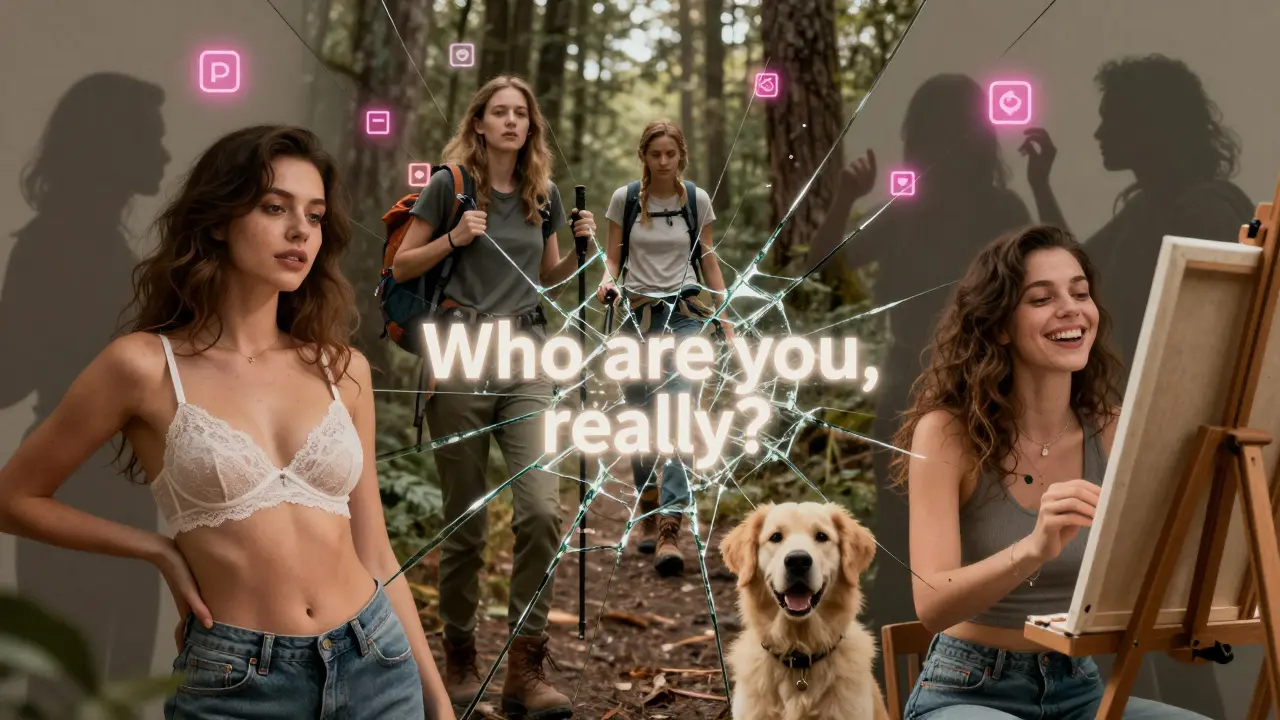
Here’s the kicker: the highest-rated matches-those that lead to real dates, not just hookups-are from profiles that show personality. A photo of someone hiking. A pic with their dog. A candid laugh. Not the one where they’re posing with their hands on their hips in a lace bra.
How to Navigate This Without Losing Yourself
So what do you do if you’re tired of the game?
If you’re a woman:
- Post one ‘busty babe’ photo if you want to get noticed-but pair it with two others that show your life. Your art, your cat, your cooking, your travel.
- Use your bio to say something real: ‘Looking for someone who remembers my coffee order.’ Not ‘Busty babe here, DM me.’
- Ignore the swipes that only say ‘Nice tits.’ They’re not worth your time.
If you’re a man:
- Ask the first question that isn’t about appearance. ‘What’s something you’re proud of this week?’
- Notice who replies with depth. Those are the ones worth meeting.
- Remember: the person who looks ‘perfect’ in photos might be the most insecure in person.
And if you’re both tired of the noise? Try apps like Hinge or Bumble BFF. They force you to write more. They show more context. They’re slower. And guess what? They’re getting better matches.
Is This Trend Here to Stay?
Maybe. But trends always fade. Remember when everyone had to have a six-pack to be desirable? Or when men had to be 6’2” and drive a BMW? Those were cultural waves, not truths.
What’s changing now is awareness. More people are calling out the pressure. More women are posting ‘I’m not posting this for likes’ captions. More men are admitting they’re bored of the same look.
The next wave? Authenticity. The person who shows up as themselves-flaws, quirks, and all-is becoming the new outlier. And outliers? They’re the ones who stand out.
What You Should Really Be Looking For
Forget the silhouette. Look for:
- Someone who laughs at their own jokes.
- Someone who remembers details you mentioned a week ago.
- Someone who asks how your day went-not just ‘wanna hook up?’
- Someone whose eyes light up when they talk about something they love.
That’s not a body type. That’s a person.
The ‘busty babes or nothing’ standard is a distraction. It’s loud, it’s viral, it’s easy to fall into. But it’s not love. It’s not connection. It’s not even really attraction.
Real chemistry? It doesn’t come from a filter. It comes from being seen. And that’s something no algorithm can replicate.
FAQ: Your Questions About the New Dating Standard
Is it true that men only want busty babes now?
No. Men are responding to what the apps show them, not what they truly want. Studies show that while initial attraction may be visual, long-term interest comes from personality, humor, and emotional connection. Many men say they prefer ‘natural’ looks but swipe right on curated photos because that’s what the algorithm pushes. It’s a mismatch between desire and behavior.
Why do women feel pressured to post these kinds of photos?
Because it works. Women who post photos with curves get more matches, more messages, and more attention on dating apps. It’s not about what they want-it’s about survival in a system that rewards visibility. Many say they do it reluctantly, just to get a chance at connection. But the cost is feeling like their body is the only thing that matters.
Does this standard affect women who aren’t busty?
Absolutely. Women with smaller busts report being ghosted more often, even when they have great profiles. The algorithm doesn’t discriminate-it just favors what gets the most clicks. That means women who don’t fit the mold have to work harder to be seen. Some change their photos. Others quit dating apps altogether.
Are dating apps to blame?
They’re not evil-they’re designed to maximize engagement. Swipe-based apps reward quick decisions, which means visual cues win. They don’t care if you find love. They care if you keep swiping. That’s why the system pushes what’s easiest to judge: bodies over brains. The problem isn’t the apps-it’s how we let them shape our expectations.
What’s the alternative to this standard?
Go slower. Use apps that ask questions before swiping, like Hinge. Post photos that show your life-not just your body. Ask people about their passions, not their photos. The people who respond with depth? Those are the ones worth meeting. Authenticity is the new rarity-and the most attractive thing you can offer.
Final Thought: You’re More Than a Swipe
The next time you swipe right on someone because of their body, ask yourself: what are you really looking for? A moment of validation? A distraction? Or someone who makes you feel seen?
The real standard isn’t about curves. It’s about courage. The courage to be yourself-even when the algorithm says you shouldn’t. The courage to look beyond the photo and ask the question that matters: ‘Who are you, really?’
That’s the connection worth waiting for.

6 Comments
Just deleted my Tinder app. Not because I’m puritanical, but because I’m tired of being judged by a photo that took 47 tries to get right. I miss when people asked about my dog before asking if I was single. Now it’s all curves or nothing. I’m not even sure I want to be seen anymore.
/p>Man, this hits different. I’m from Delhi, but I’ve been in London for three years now, and I’ve seen this shift up close. I used to think I was just bad at dating-until I realized I wasn’t the problem, the system was. I swipe right on someone who’s got a photo of her volunteering at an animal shelter, and she replies with a paragraph about her favorite indie band. That’s the kind of connection that sticks. The busty babe pics? They get likes, sure. But they don’t get late-night texts asking if you’ve seen that new documentary on coral reefs. The algorithm’s loud, but it’s not wise. Real chemistry doesn’t live in a 0.8-second swipe. It lives in the silence between replies, when you’re both just being human.
/p>Ugh I swear I’m not the only one who feels like a product on a shelf now? I posted a pic of me in a bikini last week just to see what happened. Got 87 matches in an hour. Then I posted one of me reading Kafka in a coffee shop. Zero. Zero. I cried. Not because I’m insecure-because it’s literally a rigged game. And now every guy who messages me says ‘you’re hot’ and then never asks my name. I’m not a mannequin. I’m a person who hates cilantro and collects vintage postcards. But apparently that’s not swipe-worthy.
/p>This article is a disgrace to Western values. The decline of traditional standards in dating is a direct result of cultural decay and the erosion of moral clarity. Men and women once understood their roles. Now, we are told to embrace chaos and call it authenticity. This is not liberation-it is surrender. The family unit, the foundation of civilization, cannot survive when attraction is reduced to algorithmic manipulation and performative sexuality. We must restore discipline, dignity, and decorum-or face the consequences.
/p>My mom always said, ‘People don’t fall in love with photos-they fall in love with how you make them feel.’ I’m 42, divorced, and I started using Hinge last year. I put up a photo of me hiking in the Rockies, one of me baking sourdough with flour all over my face, and one of me holding my niece’s hand at the zoo. Got 12 matches. Three of them actually asked me about the book I mentioned in my bio. One of them is now my boyfriend. He remembers I hate cilantro. He also knows I cry during dog commercials. That’s not a trend. That’s real. And it’s out there. You just have to stop scrolling long enough to find it.
/p>The phenomenon described here is not unique to London-it’s the global manifestation of what sociologists call ‘algorithmic homogenization.’ When platforms optimize for engagement over depth, they don’t just change behavior-they rewire desire. What we’re witnessing is the commodification of intimacy. The body becomes a signal, not a vessel. The mind becomes irrelevant until after the match. But here’s the beautiful irony: humans are not optimization problems. We crave meaning, mystery, and mutuality. The most attractive trait isn’t a silhouette-it’s vulnerability. The person who dares to say ‘I’m scared’ instead of ‘I’m flawless’ is the one who breaks the algorithm. Because real connection doesn’t need a filter. It needs a witness. And the more people who choose to be that witness-posting their messy kitchens, their bad hair days, their quiet passions-the faster this distorted mirror will shatter. Authenticity isn’t rare. It’s just quiet. And quiet things? They’re the last to be heard. But the first to last.
/p>